

Picture: MBDA
While the United States launches missile strikes against Iran at record rates while simultaneously reordering at unprecedented scale, European conventional long-range strike arsenals remain depleted, and efforts to fill them are haphazard and insufficient.
Unless European decisionmakers rapidly adjust course and make conventional long-range strike a core priority in capability development, European states will enter any high-intensity warfighting scenario in the late 2020s — the period officials have identified as the window of greatest danger for the continent — without an adequate conventional long-range strike capability.
This post reviews ongoing European developments in conventional long-range strike and diagnoses a European Sonderweg: a divergence from the rest of the world in this capability area.
European long-range strike developments
Three types of conventional long-range strike weapons form the backbone of modern arsenals: long-range one-way attack drones, land-attack cruise missiles, and ballistic missiles. Hypersonic boost-glide vehicles potentially play a role in some militaries as well, though their relative importance is arguably lower in Europe, especially while the other capability areas remain insufficiently addressed.
The following briefly reviews the state of European procurement across the three main categories.
Long-range one-way attack drones
In recent years, European states have moved to develop long-range one-way attack drones broadly comparable to the Iranian/Russian Shahed/Geran family or the LUCAS drone now deployed by the United States.
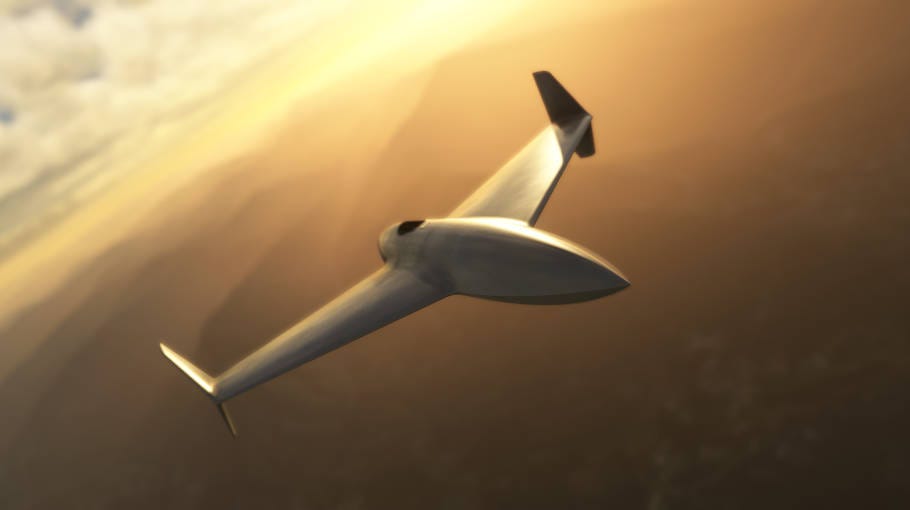
France is furthest along, pursuing two parallel programs. MBDA’s One-Way Effector — a jet-powered, 500 km-range, 40 kg warhead system — received a development and production contract in January 2026, with initial deliveries planned for 2027. Separately, Renault is preparing to manufacture the Chorus, a larger Shahed-type one-way attack drone developed with Turgis & Gaillard, under a potential ten-year, €1 billion contract.
At the multilateral level, France, Germany, Italy, Poland, Sweden, and the UK signed a letter of intent in February 2026 under the European Long-Range Strike Approach (ELSA) to jointly develop and procure the One-Way Effector (OWE) 500 Plus, a 500 km-range long-range strike weapon with a target unit price in the five-digit range. The program remains in the concept and feasibility phase.
Land-attack cruise missiles
Since 2022, European states have moved on two parallel cruise missile tracks: procuring American systems to fill near-term capability gaps while investing in longer-term indigenous programs.
Poland, Finland, and the Netherlands have all contracted JASSM-ER through US Foreign Military Sales, with a September 2024 Lockheed Martin contract covering deliveries through July 2032. Germany is reportedly planning to procure up to 400 Tomahawk Block Vb land-attack cruise missiles and ground-based Typhon launchers as a bridging solution, and has likely ordered up to 75 JASSM-ER and around 185–260 Joint Strike Missiles for its F-35A fleet. The Netherlands has also very likely ordered Tomahawk Block V, though confirmation is pending. France has restarted SCALP-EG production to backfill Ukraine deliveries at an estimated 50–100 per year; the British Storm Shadow production line remains idle.
On the development side, Germany signed a contract in December 2025 to prepare Taurus Neo serial production, with approximately 600 missiles planned and deliveries beginning toward the early 2030s. Norway and Germany are jointly developing the supersonic 3SM Tyrfing land-attack cruise missile, with a first-phase contract signed in July 2024 and fielding planned for 2035.
MBDA is developing a ground-launched land-attack cruise missile under the ELSA framework and France’s national FLP-T program. The missile is based on the Missile de Croisière Navale — deployed on French ships and submarines — and is expected to have a range exceeding 1,000 km. The first test firing is scheduled for 2027–2028. France, the UK, and Italy are also developing STRATUS, the successor to Storm Shadow/SCALP-EG, with service entry around 2028–2030.
The UK launched Project Brakestop in September 2024, requesting a 600 km-range, 200–300 kg payload missile system, ground-launched from a mobile platform, with a unit cost below $500,000. This broadly reflects the mini cruise missile design popularized by the war in Ukraine. Three competitors were down-selected, and a first test firing took place in December 2025, with serial production targeted at a minimum of 20 units per month. No production contract has been awarded yet.
Ballistic missiles
Since 2022, European ballistic missile procurement has relied almost exclusively on American and South Korean systems, with no European state fielding, or even close to fielding, an indigenously developed conventional ballistic missile.
The dominant European pattern has been the procurement of ATACMS. Latvia, Lithuania, and Estonia have been approved for up to 10, 18, and 200 ATACMS pods, respectively; Poland for 45. The Baltic states have expressed interest in the Precision Strike Missile (PrSM) — the 500-kilometer range ATACMS successor —, though Washington denied a similar Norwegian request in August 2024, making near-term deliveries to the Baltics unlikely. Norway and Poland have both ordered South Korea’s Chunmoo multiple-launch rocket system, which can launch the CTM-290 sub-300-kilometer-range ballistic missile. Missile types and quantities remain unconfirmed.
The UK is the only European state pursuing indigenous ballistic missile development. Project Nightfall, launched in December 2025, seeks a ground-launched ballistic missile for Ukraine capable of exceeding 500 km with a 200 kg warhead, priced below $1.1. million. Delivery is not expected before late 2027.
The UK and Germany announced in May 2025 their intent to jointly develop a 2,000 km strike weapon under the Trinity House Agreement. The program remains at the conceptual stage, with no industrial contract in place.
Imports, concepts, and developments
On paper, these efforts look comprehensive. But appearances deceive. Many conventional long-range strike procurement projects remain stuck in concept and development phases, while the few European systems actually being produced are manufactured in low numbers.
When systems are procured in larger numbers, they are of American or South Korean origin. As bridging solutions, these procurements are justifiable, though this narrative loses force set against the lack of urgency with which domestic long-range strike programs have been pursued since February 2022.
In several states, including Germany, not even bridging solutions have been contracted, let alone firm commitments for an indigenous conventional long-range strike solution. ELSA is a case in point. Since mid-2024, participating states have discussed multilateral deep-strike solutions. Close to two years after its inception, the consortium has produced nothing tangible.
There is also a mismatch between European procurement and the realities of industrial warfare. European states do not need hundreds of missiles — they need thousands. If fighting were to start tomorrow, arsenals would be exhausted within days to weeks. Europe needs scalable production lines for both low- and high-tier long-range strike systems to ensure steady resupply in wartime.
A European Sonderweg
What renders Europe’s reluctance to invest appropriately in conventional long-range strike — especially that of the major European powers — particularly curious is that, by global standards, they constitute the exception. Virtually every state outside Europe preparing for war has been betting heavily on missile and long-range drone technology.
This includes China and the United States, as both gear up for a potential conflict in the Asia-Pacific. It also includes Russia, which modernized its Soviet-legacy conventional long-range strike weapons through the 2010s and rapidly expanded production once the war started. But also other major and middle powers not historically associated with advanced missile arsenals — including Australia, Japan, South Korea, and Taiwan — have made outsized investments in long-range strike amid competing procurement priorities.
It is European states that have been walking a Sonderweg — a special path — diverging from the recent historical experience of others. Europe’s allies and competitors assume that entering a high-intensity warfighting contingency without deep stocks and robust missile supply chains is not a viable option. For some reason, European capitals have viewed that differently.
Thank you for this article. I share the same Weltschmerz for the European Sonderweg. Indeed, why do we struggle in our European defence industry? We all know our soft power needs to be backed by hard, military power. It's not that we don't have the money for it. Also, we're doing fine with our welfare states. Our economies are large enough to finance both welfare, health and our armies. And together, we could rival the US army power. So, what's going wrong? A few things, for instance our European history. Having seen two WW in the 20th century, Europe is still deeply divided on a deeper level. We fear the rearmament of Germany. The rift between France and the UK is still there. It only needs some fishing boats to reignite old feuds, as the Scallop War showed in 2018. We don't trust each other enough. And since WWII, we elegantly chose the US and NATO as a backstop for European rivalries. We first need to trust each other, get rid of the anti-EU sentiment, get the UK back in Europe. Together we are trying to balance the military power of Europe by curtailing it. The ghost of Metternich is still haunting us. We're stuck in the Concert of Europe. We still see Europe as a Hotel California, you can check out every time, but you can never leave. Perhaps we should all be singing Ode an die Freude more.
At this stage, it makes the most sense to invest in Ukrainian equivalents and license the technology, upgrading systems as battlefield realities dictate changes. Ukraine appears to be further ahead of many European countries in the development, production, and battlefield use of several weapon systems. Not partnering with Ukraine would be a missed opportunity compared with trying to start from scratch, and then produce in limited numbers, that will likely only be tested once a conflict starts.