

Picture: U.S. Army
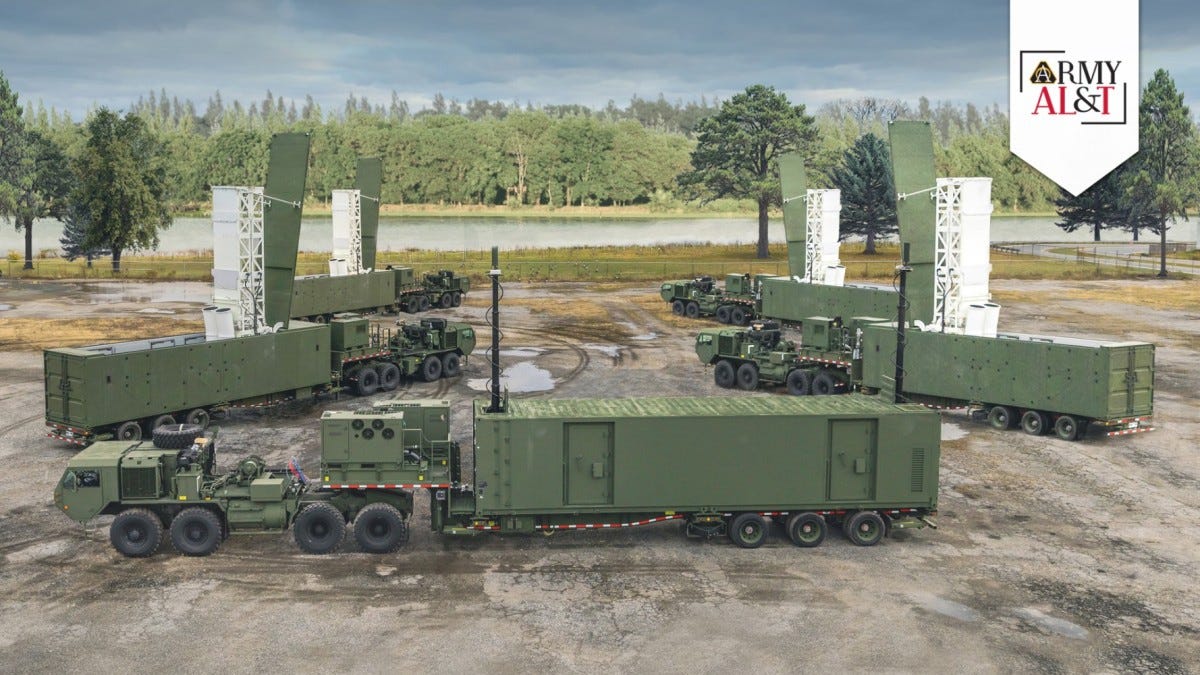
Germany first called for a deep-strike capability in its inaugural National Security Strategy of June 2023. The plans took shape in summer 2025, when Berlin formally expressed interest in procuring American Tomahawk cruise missiles and land-based Typhon launchers. In October 2025, a leaked Bundeswehr procurement list allocated €1.15 billion for 400 Tomahawk Block Vb missiles and €220 million for three Typhon batteries.
The acquisition then stalled for the better part of a year, reportedly because relations between Berlin and the Trump administration deteriorated and Washington withheld export approval. In mid-September 2026, new reports emerged that Berlin had set aside almost €3.4 billion for both the Tomahawk and Typhon systems in its 2027 budget planning. It had also secured President Trump’s political backing for the sale at the NATO Summit in Ankara and signed a letter of intent.
Although Germany and the United States have not yet formalized the Tomahawk sale, it is now likely to proceed. This post estimates how many missiles and how much associated equipment Germany could acquire with this funding, how long deliveries might take, and whether the purchase still makes sense.
How many Tomahawk missiles can Germany buy for €3.4 billion?
So far, no Defense Security Cooperation Agency (DSCA) notification has been published, and the leaked planning document does not specify how many Tomahawks Germany intends to procure. A rough estimate is nevertheless possible by accounting for the cost of the Typhon batteries, logistics and support, and per-unit missile costs drawn from published DSCA notifications and confirmed contract values.
The Typhon launchers are the easy part. Reports indicate that they cost about twice the €220 million Germany originally assumed. If Germany sticks with three batteries, this implies a plausible cost of roughly €440 million for 12 launchers, three battery command vehicles, and associated equipment.
Support costs are harder to pin down. Beyond the munitions themselves, Foreign Military Sales (FMS) packages cover weapon-control and mission-planning systems, spares, training, test rounds, engineering support, transportation, and administrative fees.
In Japan’s 2024 Tomahawk procurement, around one-third of the $1.7 billion contract value went to launch control systems and related equipment. In the Dutch Tomahawk case, major defense equipment (the missiles and their weapon control systems) accounts for only $0.95 billion of the notified $2.59 billion. That figure, however, is a ceiling rather than a contract value, and it spreads fixed costs such as mission planning equipment and integration work over only 175 missiles. For its larger order, I assume Germany’s support costs will make up a smaller share, closer to the Japanese case, at about €1.2 billion.
Subtracting this and the €440 million for the Typhon batteries leaves roughly €1.76 billion for the missiles themselves. Japan paid around $2.8 million per round in 2024, but half of its order consisted of older Tomahawk Block IV missiles. The U.S. Navy’s FY2027 budget request for 785 Tomahawks at a total cost of $3 billion implies a per-unit cost of about $3.8 million, likely for the Block V standard only. The Block Vb, which Germany reportedly wants, is a more complex variant with a multi-effect warhead, which will likely raise the price. I therefore assume a per-unit cost closer to $4.5 million, or around €4 million at the current exchange rate.
At this price, the remaining €1.76 billion buys roughly 440 Tomahawks. The €3.4 billion allocation thus most likely funds the 400 missiles listed in 2025, but at more realistic prices (the fall 2025 figures were never entirely plausible). The margin for an additional 40 missiles could be a reserve built into the budget, or it could indicate that the Block Vb costs more than estimated here, perhaps closer to $5 million per unit.
How long will German Tomahawk deliveries take?
Another key question is how long Germany will have to wait for initial deliveries and for the full order. Raytheon recently stated that it delivered three times as many missiles in the first half of 2026 as a year earlier, and the U.S. Navy’s new $22.9 billion contract funds a Tomahawk production ramp-up to more than 1,000 missiles per year. However, neither the U.S. military nor Raytheon has published a year-by-year production schedule.
U.S. demand will absorb most of the early increase in output. The United States entered the Iran war with Tomahawk stocks that analysts widely considered too low, likely around 3,000 to 4,000 missiles, and has since fired more than 1,000. As noted above, the Navy’s FY2027 request covers around 800 missiles, up from 55 the previous year. The U.S. Army also plans to deploy three additional Typhon batteries by 2028, which will require munitions.
Australia, Japan, and the Netherlands are ahead of Germany in the queue for export production slots, and Japan’s order for 400 missiles reportedly already faces a delay of up to two years (thus taking five instead of three years to complete). Moreover, the Block Vb, which Germany appeared interested in as of fall 2025, is not expected to reach fleet release before 2028 to 2029 and therefore carries some development risk. Together, these factors suggest that Raytheon will not be able to fill the German order quickly.
In an optimistic scenario, Germany signs a letter of offer and acceptance (LOA) in early 2027, the Block Vb variant is on schedule, and Germany receives priority access to production slots. Deliveries could then match Japan’s original pace of 400 missiles over roughly three fiscal years, with the first missiles arriving by 2030 and the order completed by late 2033. A more realistic baseline scenario follows currently reported timelines, which place the start of deliveries no earlier than 2031 at an estimated fewer than 100 missiles per year. Germany would then receive its full order around 2035. In a pessimistic scenario, the Block Vb faces delays or the United States conducts another major campaign that depletes its Tomahawk stocks, or both. Deliveries would then start later, and the order might not be completed until the end of the 2030s.
Where German industry fits into the Tomahawk supply chain
Berlin is also seeking a role for German industry. Officials have said talks include possible co-production and integration of German firms into the Tomahawk supply chain, which could accelerate production.
One of the most acute bottlenecks is the Tomahawk Mk 135 booster section, produced by L3Harris. Raytheon has already turned to Northrop Grumman, Anduril, Avio USA, and Nammo for additional solid-fuel rocket motors. Raytheon also relies on German propulsion specialist Bayern-Chemie for rocket motors for PAC-2 GEM-T interceptors. Bayern-Chemie could, in principle, contribute to the Mk 135 supply chain, provided it can expand capacity. Alternatively, Rheinmetall’s rocket-motor factory in Unterlüß may have relevant capacity, although it will initially focus on licensed ATACMS production.
Warheads offer a second entry point. TDW, MBDA Germany’s warhead subsidiary, builds the MEPHISTO multi-effect warhead for the Taurus KEPD 350 land-attack cruise missile. MEPHISTO follows the same design as the Block Vb’s JMEWS warhead, combining a precursor shaped charge with a follow-through penetrator. TDW could therefore plausibly supply warhead components or the entire warhead system.
Third, several European companies and missile manufacturers could take on licensed production of Tomahawk fuselage components. A German final-assembly line for Tomahawks, similar to the one for PAC-2 GEM-T interceptors, could also add capacity, though its contribution would remain limited if component production cannot scale accordingly.
In other parts of the supply chain, German industry cannot step in, at least not in the short term. The most important is the F107 turbofan engine, produced by Williams International. No German company currently builds a comparable engine or appears capable of developing one quickly, and the U.S. Department of War is already investing heavily in expanding domestic turbofan production. The second is guidance and control hardware, where German industry may be able to contribute, but the United States is unlikely to permit it.
Whatever German manufacturers contribute will matter primarily in the longer term. As the PAC-2 GEM-T case has shown, licensed production lines take years to establish and qualify. Even if decided quickly, German licensed production of Tomahawk components or complete missiles would therefore very likely increase annual deliveries only after 2030.
The case for a German Tomahawk purchase
Given likely procurement numbers, plausible delivery schedules, and potential German contributions to the supply chain, does a rationale for a German Tomahawk order still exist?
Germany’s persistent deep-strike capability gaps, particularly in ground-launched missiles, still make a case for a Tomahawk purchase, but it has weakened with every year the formal order has been delayed. Had Germany ordered Tomahawks in 2023, when it first formally identified the gap, deliveries could have begun in 2026 or 2027 and ended by 2030. Tomahawk could then have served as a genuine bridge-gap solution, providing deterrence value vis-à-vis Russia while Germany waited for a European alternative.
Now, however, even under optimistic assumptions, the order would not be completed before 2033, missing the window of vulnerability that several European intelligence services have identified for the late 2020s. By the mid-2030s, currently the most plausible order completion date, the missiles may still provide military value, but will arrive in a security environment that is harder to predict from today’s standpoint. In any case, the bridge-gap solution narrative no longer applies, and recent official statements on the Tomahawk procurement no longer appear to invoke it.
Moreover, by committing to yet another major FMS case, Germany will deepen its dependence on the U.S. industrial base, at least until and unless it secures a robust licensed-production agreement. Even then, changes in the American political or security environment could quickly set back German procurement efforts.
This post was free to read. If you find this kind of analysis useful, consider upgrading to or adding a paid subscription. Paid subscribers receive weekly expert analysis on missile technology, missile warfare, and the missile industry, including assessments that go deeper than what is published here for free. Next week’s post, available to paid subscribers, will provide an updated deep-dive into the European mini-jet engine market.
Still a tremendous missile. Bit expensive though. The Tomahawks are probably part of a joint NATO effort, just like the Dutch acquisition. So you buy a missile that's part of a joint strategy within an organisation. A vulnerable, political organisation at best. The Tomahawks make sense from a political point of view. NATO still primarily acts as a deterrence against Russia.
Hi Fabian, if you could have decided on your own, what would you have done?