
Ukraine’s Missile Evolution 2014–2025: From Long-Range Drones to Heavy-Hitters
Tracing the rise, setbacks, and future of Ukraine’s long-range strike industry

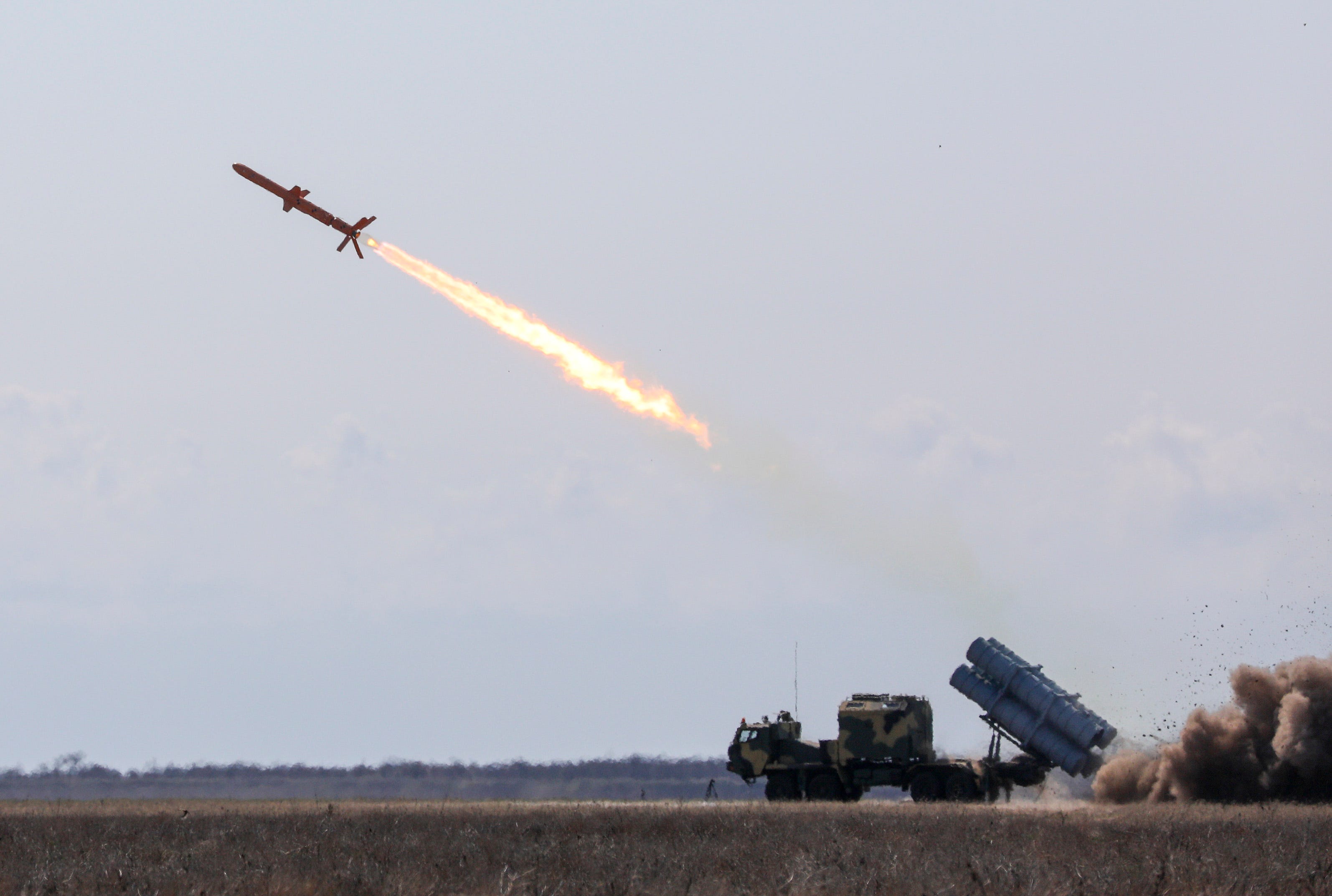
Picture: Wikimedia Commons
Ukraine’s missile industry has moved through several distinct phases since 2014, from modest post-Soviet capabilities and problem-ridden pre-war programs to wartime improvisation, foreign reliance, and now ambitious attempts at independent production.
The trajectory has been neither linear nor smooth, shaped by Russian interference, Western supply limits, domestic political pressures, and shifting industrial capacity. By 2025, Ukraine fields a diverse but still imperfect long-range strike arsenal, with lighter drones and mini-cruise missiles forming the backbone and new efforts underway to add heavier missile systems.
This post attempts to provide an initial assessment of the evolution of Ukraine’s missile industry and programs, from pre-2022 to today.
2014–2022: Ukraine’s Pre-War Missile Industry
On the eve of 2022, Ukraine retained a real but uneven missile capacity built on Soviet-era design and production hubs at Yuzhnoye and Yuzhmash, complemented by Luch for longer-range missile systems.
Concrete outputs existed but were limited in scale: the Vilkha guided 300 mm rocket entered service in 2018 with serial production beginning in 2019, and the R-360 Neptune coastal anti-ship cruise missile was delivered to the Ukrainian Navy in March 2021, reportedly just achieving initial operational capability before the war. A short-range ballistic missile program, the Hrim-2 (with the export version known as Sapsan), remained mired in prolonged development with uncertain funding and timelines.
Structural constraints in Ukraine’s missile industry were significant. Deep historical dependence on Russian components and markets, sharply disrupted after 2014 and only partially substituted by 2022. Yet opportunities remained in a skilled workforce, legacy facilities, rising domestic demand after 2014, and early export interest, such as talks with Indonesia on the Neptune in 2021.
2022: Ukraine’s Missile Industry Under Fire
The challenges Ukraine’s missile industry experienced deepened once the war began. Russia likely made a concerted effort in the early months to disrupt and destroy Ukraine’s missile industry, though details remain murky.
One confirmed case was a missile strike on the Pivdenmash production plant in Dnipro in November 2022, which produced rocket motors and liquid fuel, among other components. There are also reports that infrastructure linked to the Hrim-2 program was targeted early on, in particular a solid-fuel production plant in Dnipro, causing a setback to the program.
Within the chaos of the war and intense competition among industry and services for scarce funds and resources, scaling Ukraine’s missile industry likely posed a major challenge. Ongoing programs such as the Hrim-2 were probably turned into crash efforts tasked with delivering an operational missile as quickly as possible.
Ukraine also appears to have begun scaling and modifying the Neptune anti-ship cruise missile almost immediately, both to increase production and to adapt the design for land-attack missions. The sinking of the Moskva, which reportedly resulted from two Neptune missiles striking the ship, provided proof of concept for its maritime effectiveness, but this did not automatically translate to land environments.
Information on the initial R-360 Neptune’s guidance package is ambiguous. It is unclear whether it was equipped with a satellite receiver or relied entirely on an inertial measurement unit for midcourse guidance before the active radar seeker took over during terminal approach (if you have detailed information on this, let me know in the comments). If it lacked satellite navigation, integrating a jamming-resistant GPS receiver was likely one of the first priorities, possibly alongside the addition of a terminal guidance seeker optimized for land-attack roles.
In any case, confirmed use of land-attack–optimized Neptunes was only reported in August 2023, suggesting that these modification efforts took time to complete. That said, one theory for how Ukraine managed to strike Saki air base in August 2022 is that Neptune and/or Hrim-2 missiles were used in the attack, though this remains unconfirmed and speculative.
2023–2024: Building Independent Strike Capabilities
Ukraine’s missile industry did not appear to make major strides between February 2022 and May 2023. Whether this was mainly the result of Russian strikes on the industry, a lack of funding and resources, structural issues, or a combination of all these factors is difficult to determine from currently available information.
Ukraine only began to acquire a serious conventional long-range strike capability in May 2023, when it received Storm Shadow land-attack cruise missiles from the UK, followed by French deliveries of SCALP-EG in July. The UK likely supplied around 200 to 300 missiles in several batches, while France initially delivered about 50. Italy reportedly provided a similar number from its stocks, though this was only confirmed much later.
Nevertheless, toward the end of the year, Ukraine appeared to relaunch efforts to scale its own missile and long-range drone industry, this time with greater determination and likely more funding. This decision was probably driven — though not solely determined — by a confluence of at least four factors:
Demonstrated military and political success from Storm Shadow/SCALP-EG strikes. In addition, around mid-2023, Ukraine’s first serial-produced long-range drone, the UJ-26 Bober, also showed promising initial success.
Recognition that European long-range strike support would not be indefinite due to the depletion of available arsenals in Western Europe, paired with the decision not to restart large-scale missile production in France and the UK.
Growing realization that, despite promising early signals, Germany would not deliver Taurus KEPD 350 missiles to sustain Ukraine’s long-range strike capability beyond what France, Italy, and the UK could provide.
Understanding that Western-supplied missiles would likely always come with targeting restrictions and heavy oversight, highlighted by the Biden Administration’s approach to ATACMS deliveries at the time.
As a result, Ukraine embarked on an ambitious long- and deep-strike armament program, focusing largely on domestic suppliers of missile and long-range drone technology. Where Ukraine turned to foreign manufacturers, it relied on startups and scaleups rather than European or North American missile primes. One example is the Dutch firm Destinus, known to have provided LORD long-range drones and Ruta mini-cruise missiles.
2024–2025: Scaling Light Missiles and Long-Range Drones
By the end of 2024, this program appeared to bear fruit, with Ukraine able to produce or acquire substantial numbers of mini-cruise missiles and long-range drones of various types, and with clear ambitions to further scale these programs throughout 2025.
As of August 2025, Ukraine is fielding a range of long-range drones, including the AN-196 Liutyi (sometimes credited as the most successful long-range drone), the FP-1, the UJ-26 Bober, and the AQ 400 Scythe, among others. This is complemented by mini-cruise missiles, like the above-mentioned Ruta or the Ukrainian Pekklo.
What unites these capabilities is that they are comparatively light in nature. Although they provide a significant range, often matching or even exceeding that of Western-supplied systems, they do not combine this with either a substantial payload capacity or high velocity.
For example, most of the systems mentioned above carry payloads under 100 kilograms — sometimes as little as 10 to 20 kilograms — and travel at or below 600 km/h (with mini-cruise missiles significantly faster than long-range drones). By contrast, Storm Shadow/SCALP-EG can deliver a 450-kilogram payload to a distance of 560 kilometers while maintaining high subsonic speed throughout the flight (around 800 to 900 km/h).
This directly affects the lethality of Ukrainian missile and drone strikes. Low terminal velocity limits warhead penetrability, reducing the warhead’s ability to travel deep into a structure before detonation and thereby lowering the destructive effect. Limited payload capacity decreases the lethal radius and makes post-strike repair easier.
As a result, Ukrainian long-range strikes could disrupt Russian military positions and repeatedly damage critical infrastructure, particularly gas and oil facilities, but they rarely produced wholesale destruction.
That said, in recent weeks, as Ukraine has resumed large-scale attacks on Russian oil refineries, even lighter missile and drone systems at times appeared to have inflicted significant damage, particularly when used in saturation attacks or when initial explosions triggered fires that spread across entire sites. Still, the absence of a mass-produced heavy missile system combining long range with high payload capacity and speed has remained notable and suboptimal from a Ukrainian perspective.
2025–?: Entering the Heavy Missile Era
Ukraine’s exclusive reliance on light missile and long-range drone systems, following arsenal depletion of heavier Western missiles, is the context within which last week’s news about the FP-5 Flamingo cruise missile was received, explaining the hype surrounding the missile system.
If the Flamingo meets the manufacturer’s specifications (3,000-kilometer range, 1,150-kilogram payload), and the missile can be manufactured at scale, it would constitute the first indigenously developed and mass-produced heavy missile system in Ukraine’s arsenal.
Since the missile was unveiled last week, several reports about the manufacturer Fire Point have suggested it is best to be cautious regarding the maturity and scalability of the program. Notably, a report released on Friday indicated that Fire Point is under investigation for corruption. The aggressive marketing campaign it launched may therefore have been partly or entirely motivated as a distraction, though this is difficult to judge from the outside.
In any case, the Flamingo is indicative of a broader trend that was underway before its unveiling and will inevitably continue, whether or not the missile becomes Ukraine’s system of choice.
Work on Ukraine’s first short- to medium-range ballistic missile, the Hrim-2 (or a derivative), continues. The missile reportedly entered mass production in June 2025, though little has been heard since, aside from Russian claims in August 2025 that several Hrim-2–related production sites had been destroyed. On 25 August, Ukraine unveiled the “Long Neptune,” a 1,000-kilometer-range missile system derived from the original R-360 Neptune. Work is also reportedly ongoing on the Korshun land-attack cruise missile, based on legacy Soviet-era Kh-55 (and Kh-555) technology. While its exact specifications remain unknown, it will likely be able to deliver a 480-kilogram warhead to a distance of at least 700 to 1,000 kilometers, if not significantly more.
In other words, Ukraine has options. Whether the Flamingo is merely a marketing ploy or a real missile, it illustrates the broader dynamics in Ukraine’s missile industry in 2025, which is seeking to complement its light missile and long-range drone systems with a heavy-hitter.
When such a missile enters service, the intensity and destructiveness of Ukraine’s missile war, particularly against strategic-level targets, can be expected to rise. At the same time, as Ukraine’s missile industry continues to scale and output expands, the share of the budget devoted to long- and deep-strike capabilities will only grow. There are already indications that costs have reached a level that is no longer sustainable for Ukraine’s internal budget. This makes direct financial assistance from European partners to Ukraine’s long-range drone and missile programs increasingly important.
Thank you for the excellent overview.
Europe has already funneled through 60 billion euros in militairy aid, either direct or through the European Peace Facilty for instance. One can only assume that some of that money will be lost to corruption, not unlike Western society. For instance, Lockheed en Northrop funded the extra-marital affairs of our dear Prince Bernard from the Netherlands, for him to lobby for their militairy aircraft in the '60s and '70s. What's more important with the Flaminos that sufficient production targets are reached and the need for battlefield damage assessment. Trying to take out the oil industry or militairy industry is quite difficult, see for instance the the resilience of German oil industry in Romania despite intensive bombing during WWII. Or the rather pathetic attempt by Israel and the USA to carpet bomb Iranian nuclear facilities back to the Stone Age more recently. The same goes more or less for railroads, easy to hit, but also easy to repair, as Russian militairy shows. So yes, I'm critical of the shiny marketing campaign around the Flamingos, until I see some lasting effects.