
Flamingo Finds its Target
Assessing the Votkinsk strike and the future of Ukraine's counter-industry potential

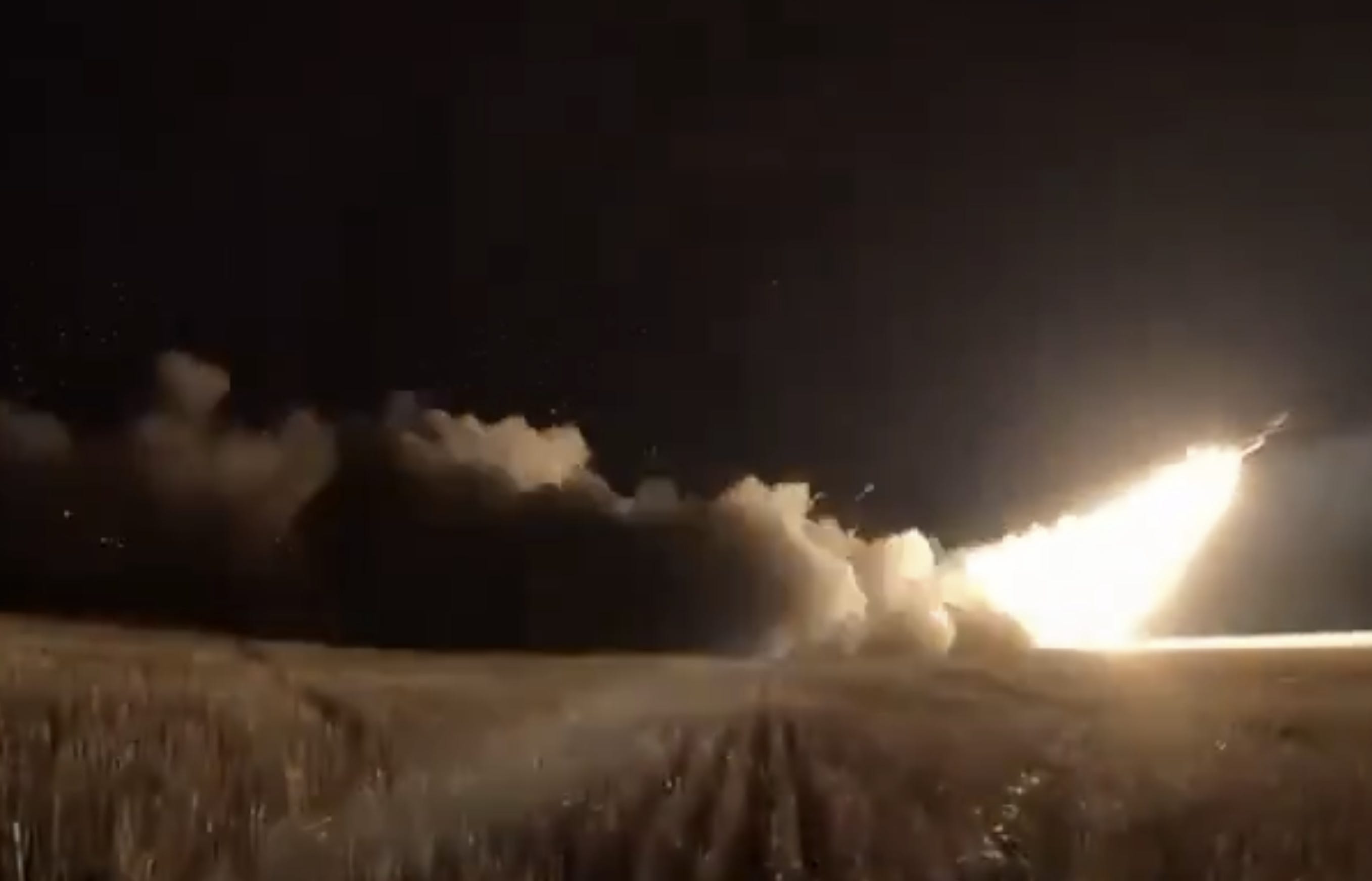
Picture: Fire Point via X
On the night of 20 to 21 February, Ukraine launched several FP-5 Flamingo land-attack cruise missiles into Russia. At least one missile is confirmed to have struck the Votkinsk missile plant, a state-owned defense enterprise and one of Russia’s most important missile factories, located roughly 1,400 kilometers inside Russia from Ukraine and about 300 kilometers east of Kazan.
Ukraine has targeted Russia’s missile and long-range drone industry before, notably the Yelabuga drone production facility, using long-range drones, which appear to have caused only limited damage, however, due to the relatively low warhead yield of the systems employed. Ukraine has achieved greater success targeting parts of the missile and drone supply chain, particularly chemical precursor materials used to produce explosives and solid fuels.
The attack on Friday night marks the first time that Ukraine has successfully struck a core target of Russia’s missile industry directly using a heavy missile capability. Satellite imagery suggests the strike caused major damage to at least one building, although the precise extent of the destruction cannot be verified at this stage.
This post discusses the implications of the attack, what it means for the Flamingo missile, and explores the potential for future Ukrainian counter-industry operations using deep strike weapons.
Votkinsk missile plant
The Votkinsk Machine Building Plant primarily serves as a final assembly and component-manufacturing site for solid-fuel ballistic missiles. Production covers strategic intercontinental ballistic missiles (ICBMs), submarine-launched ballistic missiles (SLBMs), and theater ballistic missile systems, as well as major subcomponents such as rocket motors and airframes.
In the strategic missile domain, the facility is the main producer of the RS-24 Yars ICBM and the RSM-56 Bulava SLBM. The site is also likely a primary production facility for the Oreshnik intermediate-range ballistic missile.
For theater-range ballistic missiles, the facility is the principal production site for 9M723 short-range ballistic missiles used by the Iskander-M system. Some reporting also links the plant to the Kh-47M2 Kinzhal, where it is likely involved at the component manufacturing level.
Russian missile supply chain disruption
The Votkinsk facility is an industrial campus comprising dozens of production buildings and laboratories. Open-source reporting indicates that Workshop 19 was struck during the attack, creating a hole of roughly 30 by 24 meters in the roof. The building reportedly houses a galvanizing and metal-forming shop that performs electroplating, stamping, and surface treatment of structural components prior to final assembly. Its role lies upstream in the production chain, preparing airframe sections, fasteners, and possibly electronic housings used across several missile programs.
Even limited damage could therefore slow multiple assembly lines at once if relevant components become unavailable for an extended period. The short-term impact, however, depends on existing stockpiles or the availability of alternative subcontractors. Given that Russian missile plants appear to operate continuously in three shifts (indicated also by the reported casualties during the night attack), it is plausible that substantial inventories of upstream components exist within the supply chain.
The medium- to long-term impact will depend on how quickly equipment that could have been destroyed can be replaced, including chemical bath systems, wastewater treatment and filtration units, stamping presses, CNC machines, and industrial ventilation infrastructure, among others, as well as how rapidly production lines can be recertified. Russia may be able to replace some equipment domestically, but for certain critical systems, it remains dependent on foreign suppliers, with China likely serving as the primary fallback.
Flamingo lethality
The extent of damage depends on how much machinery was ultimately affected. The Flamingo cruise missile is known to be equipped with a 1,150-kilogram payload, likely carrying TNT equivalent explosives on the order of roughly 600 kilograms.
Assuming that 10 pounds per square inch (psi) of overpressure is required to mechanically destroy equipment in the workshop, the warhead would have a lethal radius of about 30 meters. If 5 psi is considered sufficient to render equipment nonfunctional, the lethal radius could extend to around 35 meters. Lighter damage to machinery may have occurred at distances of up to 55 meters, while beyond that, blast effects are likely negligible, at least for heavier equipment. Given that the building spans roughly 130 meters in length and 55 meters in width, and depending on how the machinery is distributed inside, blast damage is likely to have been localized rather than affecting equipment throughout the entire structure.
Critically, video footage from the night of the attack shows large smoke plumes rising from the building, supporting unconfirmed reports that a fire broke out in the workshop after the strike. Traces of fire damage are also visible in satellite imagery taken afterward. If a fire did occur, and depending on how long it burned, large sections or even the entire building may have been lost.
Given the substantial fuel capacity of the Flamingo, which, according to the manufacturer, enables a range of up to 3,000 kilometers, and considering that the plant lies only about half that distance from potential launch areas, it is possible that significant unburned fuel was dispersed and ignited upon impact, increasing the likelihood of a fire.
The state of Flamingo
The strike on the Votkinsk plant marks the first confirmed successful use of the Flamingo against a high-value target and, in some ways, represents a comeback for the missile and its manufacturer, which have faced growing criticism in recent months.
Since August 2025, Fire Point has claimed a production rate of one Flamingo cruise missile per day, with plans to expand output sevenfold and eventually reach an annual production capacity of 2,500 missiles. At the same time, the Flamingo’s public footprint has remained limited. Where Ukraine has struck high-value targets, it has often continued to rely on long-range drones. Imagery of downed Flamingos and reports from Russian military bloggers about Flamingo strikes have also been scarce, suggesting a relatively low usage rate, though this ultimately remains difficult to verify from open sources.
In addition, when the Flamingo missile was previously confirmed in use, such as during the attack on an FSB outpost in northern Crimea in September 2025, it showed technical shortcomings, particularly in accuracy. Of the three missiles launched, only one landed close to the likely nominal aimpoint, while the other two impacted roughly 80 to 100 and about 200 meters away.
The confirmed Flamingo strike now suggests that production lines remain active and that the missile continues to receive funding and support from Ukrainian decision-makers. There were also reports that efforts had been underway to improve its accuracy. Although Flamingo was never intended to deliver pinpoint precision, the demonstrated accuracy levels in previous strikes were likely viewed as underwhelming.
From the Votkinsk attack alone, it is not possible to determine whether such accuracy improvements were achieved. The struck building is a comparatively large target. If the center of the structure represented the nominal aimpoint, the missile missed by a distance of roughly 20 to 25 meters, which would likely be acceptable for the Flamingo. That said, it is also possible — though perhaps less likely — that another building was targeted and that the missile impacted this structure by chance.
It is also unclear how many Flamingos were launched at the target and how many ultimately arrived in the target area. Video footage from the night of the attack suggests that several missiles were launched simultaneously, though they may have been assigned to different aimpoints. Given the site's high value, it is at least plausible that multiple missiles were directed at it, with most intercepted by air defense systems around the facility and one penetrating the defenses. As noted in an earlier post, the Flamingo’s design produces a relatively large radar cross-section, which makes it vulnerable to interception.
The future of Ukrainian counter-industry targeting
The attack on Russia’s missile industry comes at a time when Ukraine’s missile defense interceptor stocks, particularly for ballistic missile defense, are running dangerously low, and Ukraine’s partners appear unable to supply more. Nothing demonstrates this better than Europe’s current inability to find and deliver 30 PAC-3 MSE interceptors to Ukraine.
Ukraine’s ability to shift toward counter-industry targeting to preempt Russian missiles at the industrial base before they can be launched is therefore not an added benefit but a necessity. The fact that Ukraine has not yet been able to do so, partly because its partners have not sufficiently enabled it in this domain, represents a major failure of European and Western policy.
Effective counter-industry targeting will remain a major challenge. Fully taking a missile plant, such as the one in Votkinsk, out of commission would require dozens, if not hundreds, of missiles striking the target. In addition, accurate intelligence is required to locate high-value equipment so it can be struck precisely.
What currently works in Ukraine’s favor is that Russia’s defense industries, especially missile production, remain highly centralized and, unlike Ukrainian facilities, have not yet been dispersed or moved underground, although this may become a Russian response if Ukrainian counter-industry strikes persist or accelerate.
Conclusion
In the present situation, there are no silver bullets for Ukraine. Nevertheless, Ukraine’s now demonstrated ability to threaten high-value industrial targets deep inside Russian territory is a positive sign. It also remains to be seen whether the Flamingo will emerge as Ukraine’s most important heavy deep-strike weapon, though it is encouraging that the missile remains in production and is likely to be improved.
For European partners, Ukraine’s current security situation illustrates why heavy deep-strike capabilities are so necessary. While missile defense can provide effective localized protection for high-value targets, it cannot protect the entirety of Europe’s territory, especially over prolonged periods.
If European governments believe they could be involved in a prolonged war of attrition against Russia in the coming years, preparing for such a scenario, including by acquiring the deep-strike capabilities needed to target enemy production, is anything but optional. Europe’s current capability gap in this area, therefore, remains highly concerning.
Thank you for sharing this interesting and informative article. LF
Thanks for a great piece as always!